Do Vapes Have Calories? What Every Vaper Needs to Know
If you’ve ever wondered whether your vape habit could be sneaking extra calories into your day, you’re not alone. I have answered this question many times. As someone knowledgeable about vaping culture, I aim to provide you with clear, science-based answers.
This post explains whether vaping products contain calories. It examines the contents of vape juice, dispels common myths, and offers health tips for vapers.
Lastly, I will answer other questions about vaping, weight, and nutrition. My goal is to empower you with real insights—so you can vape a little smarter.
Do Vapes Have Calories? The Science Behind Vape Juice
When someone asks, “Do vapes have calories?”, they want to know if vaping can affect their weight like eating or drinking does.
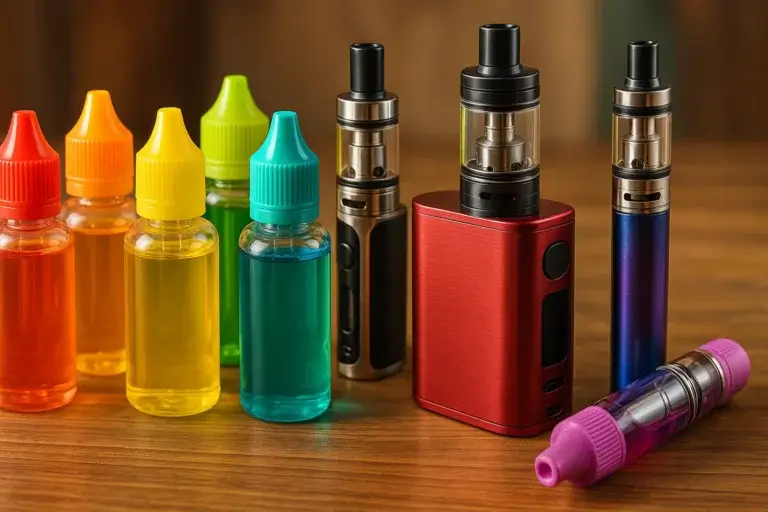
Here’s a simple breakdown of vape juice. Most e-liquids contain a combination of vegetable glycerin (VG) and propylene glycol (PG). They also have flavourings. Sometimes, they include nicotine.
As shown in Table 1 below, VG has a caloric value of approximately 4.3 kcal/g. PG has around 4 kcal/g, which is similar to sugar. In theory, 1 mL of a 50:50 blend of VG and PG contains approximately 4 kcal if ingested.
| E-Liquid Ingredient | Energy (kcal/g) | Comment |
| Vegetable Glycerin (VG) | 4.3 | Same caloric density as table sugar |
| Propylene Glycol (PG) | 4.0 | Slightly less than VG |
| Nicotine | 0 | Not a macronutrient |
| Food-grade Flavourings | ≈0 | Used at <4% of the total; negligible |
However, vaping is not eating. When you inhale, only a tiny amount of the vapour enters your body.
Experts say that the calories absorbed from a typical session are less than 0.05 kcal. This amount is minuscule.
Vapes do have calories. However, the amount is minuscule. It won’t affect your weight or health.
How Many Calories Are in Vape Juice? Breaking Down the Numbers
Let’s pin down “how many calories in a vape” with numbers and context. Each 1 mL of standard e-liquid may contain approximately 4 calories if consumed directly. But actual caloric exposure from vaping is much lower. Most scientists agree that the body does not handle calories from vaping like it does from food or drinks.
To further assess any impact, let’s examine real-world evidence:
| Study Pop. | Non-Users (BMI avg) | Vapers (BMI avg) | Overweight/Obese % | Main Results |
| College Cohort (n=519) | 24.2 ± 4.4 | 24.1 ± 4.6 | 32% (non-users), 44% (vapers) | BMI nearly identical; higher overweight in vapers linked to behavior, not calories [[Alqahtani 2020]] |
| UAB Health EMR (n=965) | 30.9 | 27.7 | – | Vapers had lower BMI after adjusting for health factors [[Obesity Science & Practice 2020]] |
| US National Survey (n=410,651) | 28.1 | 27.7 | – | Slightly lower BMI in vapers [[AHA 2019]] |
These tables show that the BMI differences between vapers and non-vapers are small or favour vapers. This is not what you would expect if calories from e-liquid were causing major weight gain.
Does Vaping Affect Blood Sugar Levels? What Vapers Should Know
Vapers with diabetes or those mindful of their metabolic health sometimes ask if vaping will affect blood sugar. The body turns both VG and PG into energy (glucose). However, when inhaled, they provide an insignificant amount compared to the amount in food. This means their effect on glucose or insulin is almost nothing.
To study this scientifically, researchers conducted large population studies in South Korea and the US. They found that some vapers had higher rates of central obesity. However, researchers linked these metabolic changes to factors like using both cigarettes and vaping, not calories from vaping aerosol.
Flavoured e-juices usually do not have enough sweetener to affect blood sugar. However, if you manage diabetes closely, talk to your healthcare provider.
Can Vaping Make You Gain or Lose Weight? Myths vs. Facts
One persistent myth is that secret calories in vaping could cause weight gain. Yes, vapes do have calories. E-liquids contain calories, but the amount you take in by inhaling is minuscule. Multiple large-scale studies show that vapers typically have the same or lower BMI than non-users.
A study looked at patient health records from the University of Alabama at Birmingham. It found that people who vape have a lower BMI. This was true even after considering factors like age, race, and tobacco use.
Instead of worrying about how many calories vaping has, focus on how smoking and vaping affect your appetite. Additionally, consider how these habits affect your activity level and overall health. Behavioural patterns—like snacking in place of smoking—affect your waistline much more than the vapour itself.
How to Approach Weight Loss Holistically: Beyond Vaping
If you value weight management or health, the small calories from vaping should not worry you. For sustainable results, prioritise your total diet, physical activity, sleep, and stress management.
Studies have shown that vaping can affect weight change. This relates to how nicotine affects appetite and metabolism, rather than the number of calories. If you are asking, “How many calories are in a vape for weight loss?” consider this instead. Focus on eating less, moving more, and building healthy habits.
Consulting health professionals when making lifestyle changes is always a good idea. They can help you understand data and apply it to your journey.
Vaping vs. Eating: How Calorie Absorption Profoundly Works
Let’s clear up a key misconception: calories from vaping are not like calories from eating. Your body’s ability to absorb calories depends on your digestive system.
When you vaporise and inhale e-liquids, caloric macronutrients do not enter your digestive tract in meaningful amounts. Instead, people mostly exhale them, and the fraction that absorbs remains physiologically irrelevant. The largest studies show no direct link between the calories in inhaled vape juice and weight gain.
| National Health Survey (Korea, n=14,738) | Never Vaped | Current Vapers |
| Abdominal obesity | 23.6% | 25.9% |
| Hypertriglyceridemia | 25.7% | 29.8% |
| Metabolic syndrome | 23.6% | 25.9% |
Even here, any observed differences in weight or metabolic health relate to nicotine or lifestyle—not calories in vapor.
Conclusion: Do Vapes Have Calories?
So, do vapes have calories? Technically, yes—the ingredients in vape juice have caloric values if ingested.
Real-world data and studies show that vaping gives your body an insignificant amount of calories. This amount is insufficient to cause weight gain or negatively impact your health, as would eating or drinking. Studies from the US, Korea, and others confirm vapers don’t have higher BMI from inhaled calories.
If you’re managing your weight or concerned about your health, focus on your food choices, physical activity, and overall lifestyle habits instead. Vaping will not significantly impact the calorie count.
FAQ:
Vaping—especially with sweet or dessert-flavored e-liquids—sometimes helps vapers manage cravings for candy, soda, or other sugary snacks. This is mostly behavioral and sensory: the act of vaping, paired with flavor satisfaction, may distract some people from snacking, although there’s no direct effect of vaping on appetite hormones outside of nicotine’s mild appetite-suppressing properties.
Since the caloric content of inhaled vape aerosol is too low to measure, vaping does not “break” a fast in the traditional dietary sense. However, zero-calorie or not, some people find that sweet vape flavours can trigger hunger or cravings, so personal experience may vary.
Unlike sugary foods and drinks, e-liquids do not coat the teeth in sugar, so the direct risk for dental cavities from vaping is not the same as with eating sweets. However, the long-term impact of vaping on oral health (for example, dry mouth that can increase cavity risk) is still being studied.
For athletes or those tracking macros/calories closely, the negligible caloric absorption from vaping does not impact dietary goals, performance, or body composition. Vaping does not contribute meaningful energy to total daily intake, so it requires no special consideration in calorie-counting or performance nutrition.
Reputable e-liquids do not contain nutritional supplements, fats, or protein, and therefore do not add calories via these means. Any “vitamin vape” product should be approached with caution, as inhaled vitamins are not proven to be effectively absorbed and may pose respiratory risks rather than caloric concern. Always check ingredients before purchasing or using novel vape products.